
SIDE BY SIDE
Oil Filter Paper Comparison: Laminated Media for Oil and Water Separation
This oil filter paper comparison reviews Laminated Filter Media For Oil And Water Separation and Fuel Oil/water Separator Filter Paper using their published application, construction description, grammage, thickness, burst strength, air permeability, maximum pore size and filtration data. Because the records use different fields, units and test conditions, buyers should verify suitability against the equipment and operating requirements.
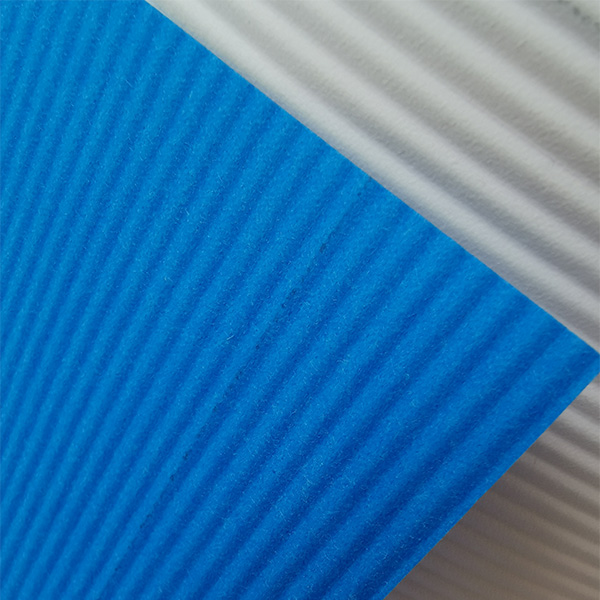
Laminated Filter Media For Oil And Water Separation
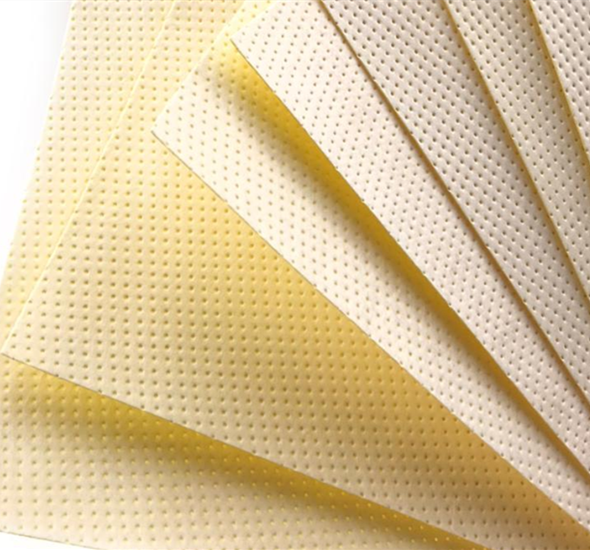
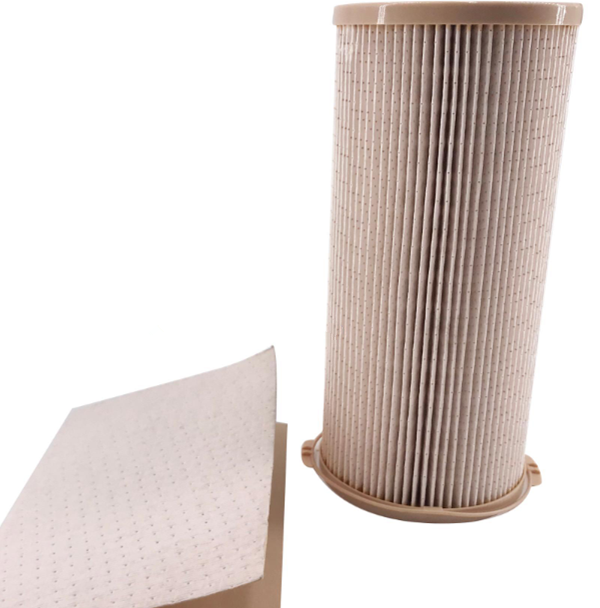
Fuel Oil/water Separator Filter Paper
Selecting oil filter paper for oil-and-water separation requires more than comparing product names. This review compares Laminated Filter Media For Oil And Water Separation with Fuel Oil/water Separator Filter Paper using only the published records available for each product.
The records do not use identical specification formats or provide the same test information. This article therefore reports documented differences without ranking either product or claiming that one is a universal replacement for the other.
Comparison scope and criteria
The comparison covers:
- Stated application
- Construction or material description
- Grammage
- Thickness
- Burst strength
- Air permeability and stated test pressure
- Maximum pore size
- Curing information and published particle-size filtration results
The values are retained in their supplied units and formats. The records do not establish a common test method, fluid, temperature, pressure or equipment configuration for every measurement. A matched technical datasheet or sample evaluation should be requested before approving a substitution.
Side-by-side specification comparison
| Criterion | Laminated Filter Media For Oil And Water Separation | Fuel Oil/water Separator Filter Paper |
|---|---|---|
| Stated application | Oil and water separation | Laminated filter paper for fuel and water separation |
| Construction or material description | Phenolic mesin coated composite filter paper | The product is laminated. |
| Grammage | 250 g | 250 ± 20 g/m² |
| Thickness | 0.92 mm | ≥0.65 mm |
| Burst strength | 485 kPa | ≥400 kPa |
| Air permeability | 67 L/m²·s | 130 ± 30 L/m²·s at p=200 Pa |
| Maximum pore size | 43 μm | 55 ± 10 μm |
| Curing information | 180°C for 10 minutes | Unavailable |
| Published particle-size filtration results | 4 μm: 91.02%; 6 μm: 93.87%; 8 μm: 94.28%; 10 μm: 94.48%; 15 μm: 94.81%; 20 μm: 95.27% | Unavailable |
Application and construction
The first product is Phenolic mesin coated composite filter paper for oil and water separation. Its curing condition is 180°C for 10 minutes. The second product is laminated filter paper for fuel and water separation.
These records support an application-level comparison, but they do not establish that the products have the same laminate structure or manufacturing process. Chemical compatibility, thermal resistance and bonding behavior should be confirmed for the intended fluid and process.
Grammage and thickness
The first product lists grammage as 250 g and thickness as 0.92 mm. The grammage unit is not expanded in that record. The second product lists 250 ± 20 g/m² and a minimum thickness of 0.65 mm.
Mechanical and airflow-related values
The first product lists burst strength of 485 kPa and air permeability of 67 L/m²·s. The second lists burst strength of at least 400 kPa and air permeability of 130 ± 30 L/m²·s at p=200 Pa.
The air-permeability values are not a like-for-like performance ranking because the first excerpt does not state the test pressure, while the second does. The burst-strength entries also differ in form: one is a listed value and the other is a minimum specification. A common test method and conditioning protocol are needed for a fair numerical comparison.
Pore size and filtration results
The maximum pore size is 43 μm for the first product and 55 ± 10 μm for the second. The first product also reports particle-size filtration results at 4, 6, 8, 10, 15 and 20 μm.
The missing results for the second product do not establish higher or lower filtration performance. Buyers with a defined particle-removal target should request the same test format for both materials, including the test fluid, particle distribution, flow conditions and reporting basis.
How to evaluate the two oil filter paper options
- The first product provides a published curing condition and particle-size filtration results.
- The second product provides a stated air-permeability pressure and minimum specifications for burst strength and thickness.
- Neither record confirms dimensional fit, fluid compatibility, service life, pressure-drop behavior or production-line compatibility for a particular installation.
These are documentation-based distinctions, not claims that one product performs better in every application.
Supplier questions before approval
Before ordering either material, request a controlled comparison that confirms:
- The complete grammage unit and tolerance for the first product.
- Nominal thickness and measurement method for both products.
- The air-permeability test pressure and method for the first product.
- A common burst-strength test method and conditioning protocol.
- Particle-size filtration results for the second product on the same basis as the first.
- Fluid compatibility and operating temperature and pressure limits for the intended separation process.
- Roll or sheet dimensions, forming requirements and any curing or lamination conditions required by the filter manufacturer.
Conclusion
Both products are laminated separation media, but their technical fields and test conditions differ. Laminated Filter Media For Oil And Water Separation is Phenolic mesin coated composite filter paper and includes a curing condition and particle-size filtration results. Fuel Oil/water Separator Filter Paper has grammage, minimum thickness, minimum burst strength, air permeability at 200 Pa and maximum pore size.
For an oil filter paper sourcing decision, use a common datasheet and matched test conditions rather than isolated numbers. Final selection should follow the equipment design, separation target and verified operating requirements.
THE PEOPLE

About the author
THE COMPANY
ANYA FILTER MEDIA CO., LTD
Shijiazhuang Anya filter media co.,Ltd has been manufacturing a variety of filter medias for lots of filters since 1992. Our mission is to provide maximum value to customers through the continuous pursuit of improvement programs in areas of quality, cost and service. We have the advanced production equipment to manufacture high quality products. We ensure products to meet their specifications and high performance by our strict quality control system.…
About Us ↗Visit company website ↗YOUR NEXT STEP
Bring your brief. Start a useful conversation.
Use case, specification, quantity and delivery window: make the next conversation specific.
Post time: Oct-30-2026