THE BUYER'S GUIDE / SELECTION
Choosing Phenolic Resin Filter Paper: Application Fit and Specification Checks
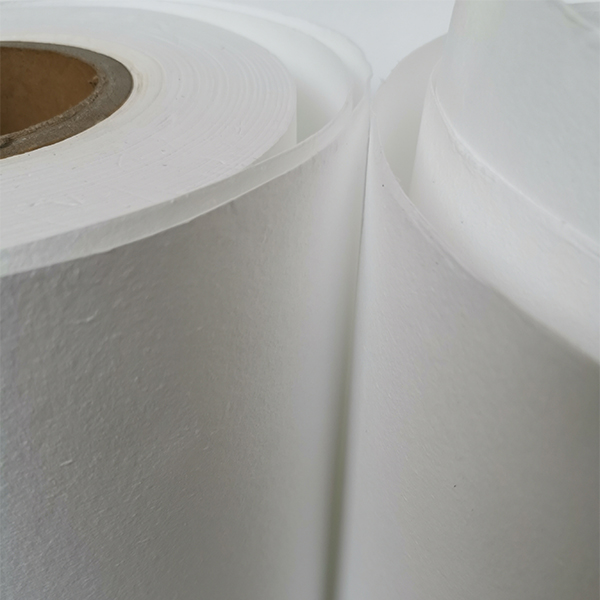
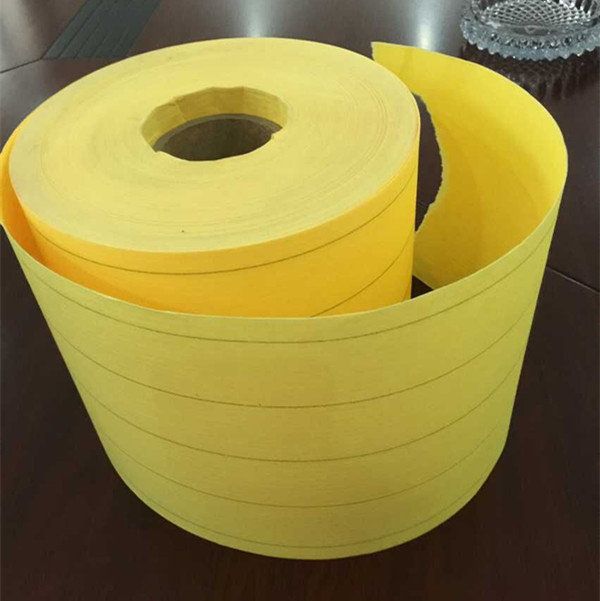
Phenolic resin filter paper is a cured filtration medium designed primarily for automotive oil filtration. This guide covers the key specification checks and application conditions buyers should verify before purchasing—including burst strength, porosity, and resin system—based on confirmed product data from ANYA FILTER MEDIA CO., LTD. Price, delivery times, and certifications are not addressed where materials are absent.

Resin system (phenolic vs. acrylic): Determines chemical resistance and thermal stability in the target fluid environment. Phenolic resin is confirmed for automotive oil filtration; acrylic resin grades cover oil, fuel, air, and industrial applications.
Burst strength (pre-cure and post-cure): Confirmed post-cure burst strength is 350 ± 30 kPa for the Phenolic Resin Filter Paper grade. This figure must exceed the maximum differential pressure expected during cold starts or high-viscosity conditions in the target application.
Pore size (maximum and average): Maximum pore size 80 ± 5 µm, average pore size 55 ± 5 µm. Buyers must verify that this pore profile captures the particle sizes relevant to their contamination class; finer or coarser grades require a different specification.
Air permeability: Confirmed at 350 ± 30 l/m²·sec. Must be compatible with the filter housing geometry and system pressure drop budget. Applications with very different flow demands—such as air filtration at 110–850 l/m²·s—require a different media grade.
Stiffness and corrugation depth: Post-cure stiffness is 6 ± 1 mN·m; corrugation depth is 0.25 ± 0.05 mm. Relevant for buyers who pleat or corrugate media in-house; these values must suit the pleating machine tolerances and target element geometry.
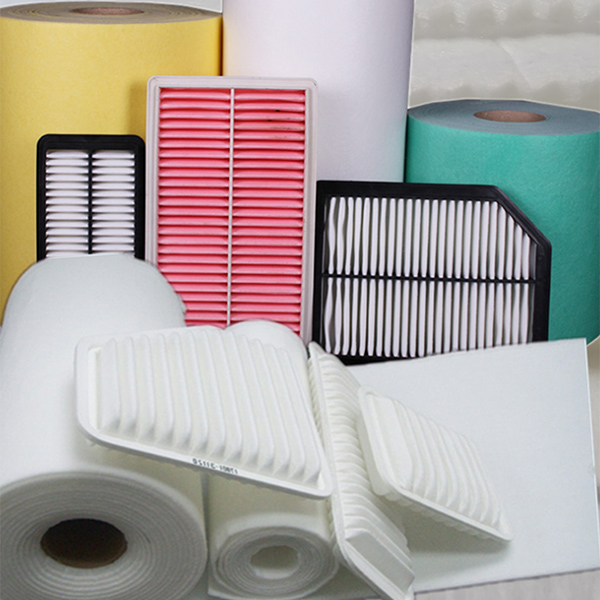
Application category match: The confirmed grade targets oil filtration for cars. Fuel filtration, air filtration, and industrial gas turbine or dust collector filtration each have dedicated confirmed grades with different resin systems, permeability ranges, and basic weights.
What Is Resin Filter Paper?
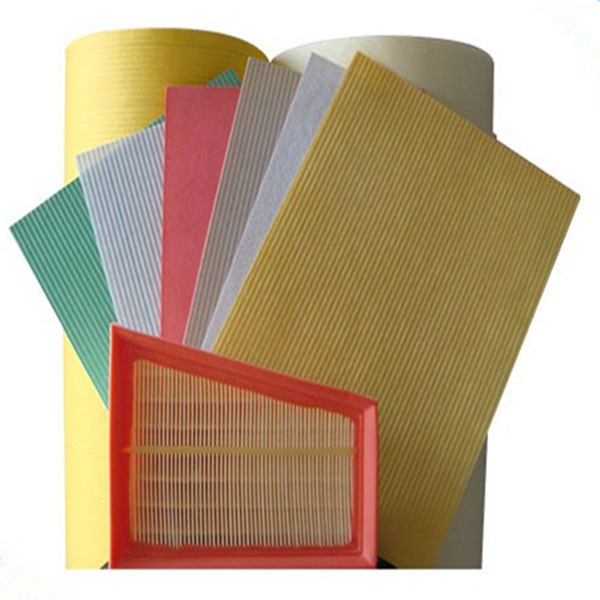
Resin filter paper is a cellulose-based filtration medium that has been impregnated and cured with a resin system—most commonly phenolic resin—to enhance wet strength, stiffness, and dimensional stability under oil and pressure. The curing process transforms the base paper into what the industry calls cured filter paper, making it suitable for demanding fluid filtration environments where an uncured sheet would degrade quickly.
ANYA FILTER MEDIA CO., LTD supplies a Phenolic Resin Filter Paper specifically developed for automotive oil filtration. The product data described below is drawn directly from confirmed product specifications; buyers should use these figures as reference points when comparing options or requesting custom grades.
Key Specifications to Check
Before selecting any resin filter paper, procurement teams should request and verify the following property groups.
1. Resin System
The resin system determines chemical resistance, thermal stability, and how the paper responds to prolonged oil exposure. The confirmed product uses a phenolic resin (cured filter paper) system designed for oil filtration in cars. Phenolic resin provides strong bonding between fibers and resists breakdown in the oil environment typical of automotive engine applications.
2. Basic Weight (Grammage)
Basic weight directly affects filtration capacity and flow resistance.
| State | Basic Weight |
|---|---|
| Before curing | 135 ± 5 g/m² |
| After curing | 125 ± 5 g/m² |
The curing process causes a measurable reduction in grammage. Buyers receiving uncured stock should confirm the post-cure weight when comparing to finished filter specifications.
3. Thickness
Thickness affects how the paper pleats, how it seats in filter housings, and the effective filtration area achievable per unit volume.
| State | Thickness |
|---|---|
| Before curing | 0.55 ± 0.005 mm |
| After curing | 0.55 ± 0.005 mm |
For this grade, nominal thickness is stable through the curing process.
4. Air Permeability
Air permeability (350 ± 30 l/m²·sec) indicates the openness of the fiber structure. This figure influences flow resistance in the assembled filter element. Applications requiring high flow rates at low pressure drop should check whether this permeability is compatible with the intended filter housing and pump specifications.
5. Pore Size
| Parameter | Value |
|---|---|
| Maximum pore size | 80 ± 5 µm |
| Average pore size | 55 ± 5 µm |
Pore size determines which particle sizes are retained. For oil filtration targeting contaminants such as metal wear particles, carbon deposits, and sludge, the pore profile should match the contamination class expected in service.
6. Burst Strength
Burst strength reflects the paper's ability to withstand differential pressure across the filter element—especially important during cold starts when oil viscosity is high.
| State | Burst Strength |
|---|---|
| Before curing | 250 ± 30 kPa |
| After curing | 350 ± 30 kPa |
The 40% increase in burst strength after curing is a direct benefit of the phenolic resin treatment and is a critical acceptance criterion for finished filter media.
7. Stiffness
| State | Stiffness |
|---|---|
| Before curing | 4 ± 1 mN·m |
| After curing | 6 ± 1 mN·m |
Higher stiffness after curing helps maintain pleat geometry under continuous oil flow and vibration, preventing pleat collapse that would reduce effective filtration area.
8. Corrugation Depth
The corrugation depth of 0.25 ± 0.05 mm is relevant for buyers who corrugate or pleat the media themselves. Consistent corrugation depth ensures uniform pleat spacing and predictable element performance.
9. Volatile Content
Volatile content of 7 ± 2% indicates residual solvents or moisture remaining in the paper. Buyers using this material in a filter-making machine or curing oven should confirm that their process parameters accommodate this volatiles range.
Application Fit: When to Choose Phenolic Resin Filter Paper
This grade is confirmed for automotive oil filtration. The following conditions indicate a good application fit:
- Oil filter elements for passenger cars and light commercial vehicles — The pore range (avg. 55 µm) and burst strength profile (post-cure 350 kPa) align with typical automotive oil filter requirements.
- Filter elements produced in-house — Buyers operating their own filter-making machinery can source the paper in its pre-cure state and complete curing in their own process, taking advantage of the uncured burst strength (250 kPa) for handling and pleating.
- Applications requiring consistent pleat geometry — The controlled stiffness and corrugation depth support downstream pleating and winding operations.
- High-volume OEM or aftermarket supply — The paper is described with fixed tolerance ranges across all key parameters, which supports consistent batch-to-batch quality.
When This Grade May Not Apply
- Fuel filtration — Fuel filter paper typically has different permeability and material requirements. ANYA FILTER MEDIA CO., LTD also supplies a dedicated fuel filter paper (cellulose or composite with melt brown, acrylic resin, 90–350 g/m², 35–240 l/m²·s) that is designed for fuel environments.
- Air filtration (engine or cabin) — Air filter applications require higher permeability ranges. The confirmed air filter paper grade (105–180 g/m², 110–850 l/m²·s, acrylic resin) is a more appropriate starting point.
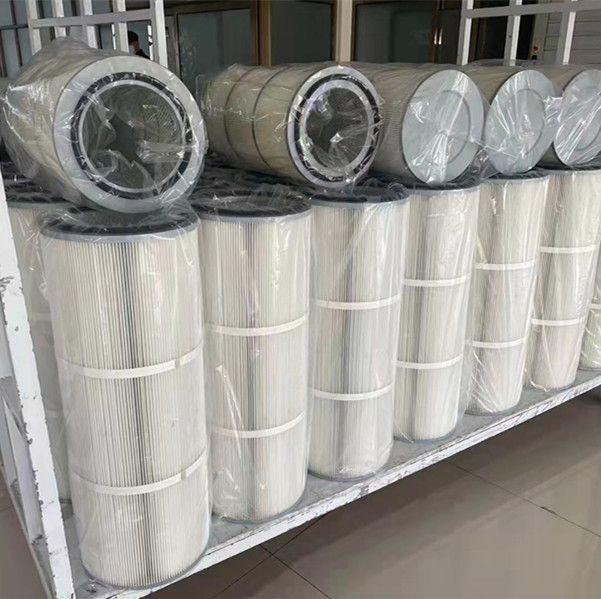
- Industrial gas turbine or dust collector filtration — These applications require F7–F9 efficiency ratings and specific pulse-cleanable media; the confirmed industrial filter paper grade is the relevant option.
- Ultra-fine oil filtration below 50 µm average pore size — Where system requirements call for finer contaminant capture, buyers should request a different grade and verify pore specifications against system contamination targets.
Comparing Resin Systems Across the Product Range
ANYA FILTER MEDIA CO., LTD produces filter media with two main resin systems across its confirmed product range:
| Media Type | Resin System | Typical Application |
|---|---|---|
| Phenolic Resin Filter Paper | Phenolic (cured) | Automotive oil filtration |
| Oil Filter Paper | Acrylic resin | Oil filtration — vehicles and machinery |
| Fuel Filter Paper | Acrylic resin | Fuel filtration — vehicles and machinery |
| Air Filter Paper | Acrylic resin | Air filtration — vehicles and machinery |
| Industrial Filter Paper | Acrylic resin | Gas turbines, dust collectors |
Phenolic resin is the distinguishing feature of the confirmed Phenolic Resin Filter Paper grade. Buyers evaluating a resin paper filter for oil service should confirm whether their application requires phenolic resin or whether an acrylic-resin oil filter paper would meet the same service conditions.
Procurement Checklist
Use the following checklist when evaluating resin filter paper for a new application or qualifying a new supplier:
- Confirm the resin system — phenolic or acrylic, and verify it matches your oil, fuel, or air service.
- Request post-cure specifications — basic weight, thickness, burst strength, and stiffness should all be stated in the cured condition.
- Verify pore size vs. system contamination class — match maximum and average pore size to the particle sizes you need to remove.
- Check air permeability against flow requirements — ensure the permeability value is compatible with your filter housing and operating pressure drop.
- Confirm corrugation depth and stiffness for your pleating process — particularly if you pleat in-house.
- Clarify custom grade availability — where standard tolerances do not meet your specifications, ask whether the supplier can adjust parameters to match your sample or drawing.
About ANYA FILTER MEDIA CO., LTD
ANYA FILTER MEDIA CO., LTD has been manufacturing filter media since 1992. Its confirmed product range includes cellulose filter paper, fiberglass filter media, nonwoven filter media, filter-making machines, and filter accessories—covering oil, air, fuel, and industrial filtration applications for vehicles and machinery.
THE PEOPLE

About the author
THE COMPANY
ANYA FILTER MEDIA CO., LTD
Shijiazhuang Anya filter media co.,Ltd has been manufacturing a variety of filter medias for lots of filters since 1992. Our mission is to provide maximum value to customers through the continuous pursuit of improvement programs in areas of quality, cost and service. We have the advanced production equipment to manufacture high quality products. We ensure products to meet their specifications and high performance by our strict quality control system.…
About Us ↗Visit company website ↗YOUR NEXT STEP
Bring your brief. Start a useful conversation.
Use case, specification, quantity and delivery window: make the next conversation specific.
Post time: Oct-28-2026