THE BUYER'S GUIDE / SELECTION
Choosing Wire Mesh Filters: Opening Size, Wire Diameter and Application
Wire mesh filters are used across oil and gas, HVAC, water treatment, automotive, and industrial processing — but choosing the right one requires matching several physical parameters to the job. This guide explains the key selection criteria: mesh count and aperture (opening) size, wire diameter, weave pattern, material, and the operating environment. It maps these criteria to specific application categories and describes when a stainless steel wire mesh filter, a sintered wire mesh filter, or a plain-weave wire filter best fits a buyer's requirement. Recommendations are drawn from ANYA FILTER MEDIA CO., LTD product descriptions; price, lead time, and certification claims are excluded where materials are absent.

Opening (aperture) size and mesh count: determines the smallest particle retained; ANYA FILTER MEDIA CO., LTD offers 5–500 mesh covering coarse to ultra-fine filtration with aperture sizes from microns to millimetres.
Wire diameter: governs structural strength under pressure and the open area available for flow; heavier gauge is required for high-pressure hydraulic and oil circuits while finer wire suits low-pressure, high-throughput applications.
Material grade: stainless steel 304/316, galvanised steel, brass, or copper — chosen based on corrosion environment, operating temperature, and process-fluid compatibility.
Weave pattern: plain, twill, Dutch, crimped, or welded — controls filtration precision, structural rigidity, and suitability for the operating pressure and vibration profile.
Physical form and customisation: rolls, sheets, discs, cones, tubes, pleated elements, or framed panels must match the filter housing geometry; layering or pleating is available to increase filtration area.
Operating environment and application: air/gas (HVAC, compressors), oil/fuel (automotive, machinery), hydraulic circuits, water treatment, chemical/pharma processing, and mining each impose distinct pressure, temperature, chemical, and cleaning requirements that further narrow material, weave, and aperture selection.
What Are Wire Mesh Filters?
Wire mesh filters are filtration elements made from interwoven or welded metal wires, forming a uniform grid of openings that separate solids from liquids, gases, or slurries. Unlike membrane or fiber media, metal mesh retains its shape under mechanical stress, pressure cycles, and elevated temperatures, which makes it a default choice for demanding industrial filtration.
ANYA FILTER MEDIA CO., LTD supplies wire mesh filters and wire mesh for filters in a range of materials, weave types, and aperture sizes for industries including oil and gas, water treatment, HVAC, automotive, chemical processing, pharmaceuticals, mining, and food production.
Criterion 1: Opening (Aperture) Size and Mesh Count
The most fundamental selection parameter is the size of the opening — also called aperture or pore size — which determines the smallest particle the mesh will retain.
- Mesh count (e.g., 5 mesh, 200 mesh, 500 mesh) expresses the number of wires per linear inch. A higher mesh count means finer openings.
- Aperture size is the actual clear opening between wires, measured in microns or millimetres. It is not simply the inverse of mesh count; wire diameter also affects it.
- ANYA FILTER MEDIA CO., LTD offers mesh counts from 5 to 500 mesh, covering coarse screening to ultra-fine filtration, and aperture sizes from microns to millimetres.
How to select:
| Filtration requirement | Typical mesh range | Typical use |
|---|---|---|
| Coarse debris screening | 5–30 mesh | Mining, large-particle water strainers |
| General liquid/gas filtration | 30–200 mesh | Oil, hydraulic, air, fuel filters |
| Fine particle removal | 200–500 mesh | Pharmaceutical, food, chemical |
A coarser mesh allows higher flow rates; a finer mesh captures smaller particles but increases pressure drop. Match aperture size to the particle size you need to exclude, not to a round mesh number.
Criterion 2: Wire Diameter
Wire diameter directly affects two properties that matter to buyers:
- Structural strength — heavier-gauge wire withstands higher differential pressure and mechanical shock without deforming.
- Open area — for the same mesh count, thinner wire produces a larger open area, improving flow rate but reducing burst strength.
When operating pressure is high (for example in hydraulic filter circuits or high-pressure gas systems), specify a larger wire diameter even if it reduces the open area slightly. For gravity-fed or low-pressure applications, a finer wire with more open area supports throughput.
Wire diameter and mesh count together define aperture size, so both must be specified when ordering to avoid receiving mesh that meets the mesh count but not the actual opening requirement.
Criterion 3: Material
Material selection governs corrosion resistance, temperature tolerance, and compatibility with process media.
Stainless Steel Wire Mesh Filter (304 / 316)
Stainless steel 304 and 316 are the most widely used base materials. Grade 316 provides better resistance to chlorides and aggressive chemicals than 304. ANYA FILTER MEDIA CO., LTD produces wire mesh in both grades. Stainless steel wire mesh filters are suitable for:
- Aqueous and chemical environments where corrosion is a risk
- High-temperature applications (e.g., exhaust gas, steam, high-pressure oil)
- Applications requiring repeated cleaning and re-use
- Pharmaceutical and food-grade processes where metal contamination must be minimised
Galvanised Steel
Galvanised steel wire mesh offers moderate corrosion protection at lower cost. It is appropriate for HVAC pre-filtration, agricultural water screening, and general industrial applications where extreme chemical exposure is not expected.
Brass and Copper
Brass and copper meshes provide good corrosion resistance in water and mild chemical media, and offer inherent antimicrobial properties useful in some water-treatment contexts. They are less commonly used than stainless steel in high-pressure or high-temperature circuits.
Criterion 4: Weave Pattern
The weave pattern determines how tightly the wires interlock and, in combination with wire diameter, controls filtration precision.
- Plain weave — each weft wire passes alternately over and under each warp wire. It is the most common pattern for general-purpose wire mesh filters and is easy to cut, stamp, and form.
- Twill weave — each weft wire passes over two then under two warp wires, allowing heavier-gauge wires to be used at finer mesh counts. Suitable where structural rigidity is prioritised alongside fine filtration.
- Dutch weave — warp wires are heavier and more widely spaced; weft wires are packed tightly. This produces very fine, precise apertures with high strength, commonly used in high-pressure hydraulic and oil filtration.
- Crimped mesh — wires are pre-formed into a wave before weaving, locking the intersections for stability under vibration. Used in coarse screening, mine decks, and vibrating-screen applications.
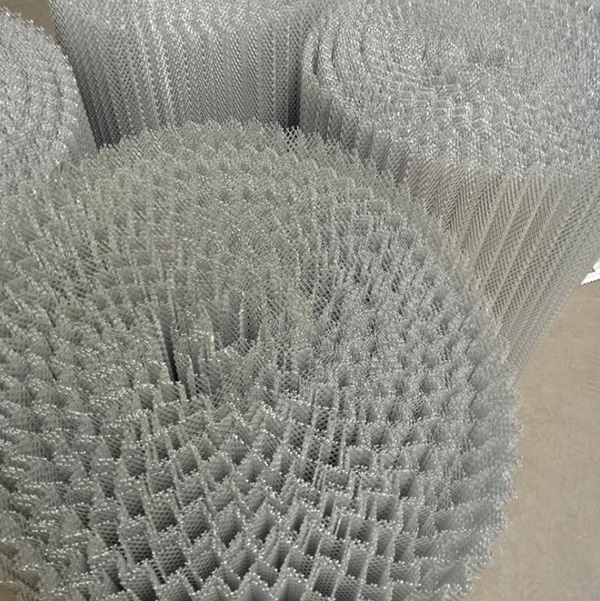
- Welded mesh — wires are resistance-welded at each intersection rather than woven. It offers higher rigidity and is used as support/backing layers for finer filter media.
ANYA FILTER MEDIA CO., LTD supplies plain, twill, Dutch, crimped, and welded wire mesh types to match these requirements.
Criterion 5: Operating Environment and Application
Beyond the physical parameters, operating conditions determine which product is applicable:
Wire Mesh Air Filter (HVAC, Compressors)
For air and gas filtration in HVAC systems or air compressors, a mid-range mesh count with a galvanised or stainless steel construction is typical. The mesh acts as a pre-filter to remove large particulates before they reach finer downstream media. It must withstand airflow-induced vibration and periodic washing without deforming.
Oil and Fuel Filters (Automotive, Machinery)
Automotive and machinery oil/fuel filters require fine-aperture stainless steel mesh capable of operating under pulsed hydraulic pressure. Dutch-weave or twill-weave stainless steel wire mesh filters are preferred because the tight, interlocked structure resists pressure surges while maintaining a defined cut-off.
Hydraulic Filter Circuits
Hydraulic systems combine high pressure with contamination sensitivity. Wire mesh in hydraulic filters must maintain dimensional stability so that a pressure spike does not permanently enlarge the mesh openings. Sintered wire mesh filters — produced by bonding multiple layers of wire mesh under heat and pressure — deliver additional structural rigidity and a more controlled pore structure for these applications.
Water and Wastewater Treatment
Water filtration uses wire mesh as strainer elements, support screens, and backwash filter surfaces. Stainless steel 316 is preferred in seawater or high-chloride environments. The mesh may be formed into baskets, cones, or flat panels depending on the vessel geometry.
Chemical and Pharmaceutical Processing
Chemical-process and pharmaceutical applications require certified metal grades that resist the specific reagents involved and do not contribute extractables to the product stream. Fine stainless steel mesh (200–500 mesh) is typically specified. Wire mesh can also function as a support layer for finer non-woven or fiberglass media when a single mesh layer would not provide sufficient chemical-retention performance.
Mining and Solids Separation
Coarser, crimped, or welded mesh in heavier gauges is used in mining for vibrating screen decks and gravity separators. Here, aperture size is measured in millimetres, not microns, and abrasion resistance governs material choice.
Criterion 6: Physical Form and Customisation
Wire mesh for filters is supplied in multiple physical forms that must match the filter housing or assembly:
- Rolls or sheets — for OEM fabricators cutting their own elements
- Discs — stamped or cut for cartridge end-caps or in-line strainers
- Cones and tubes — formed for inline basket strainers or suction filters
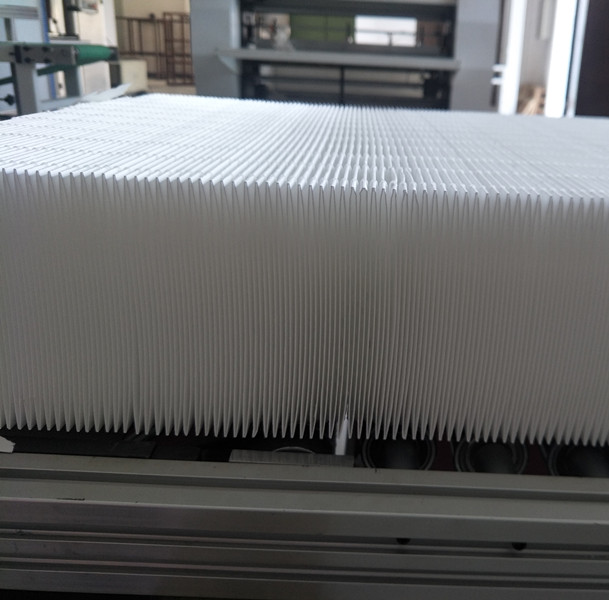
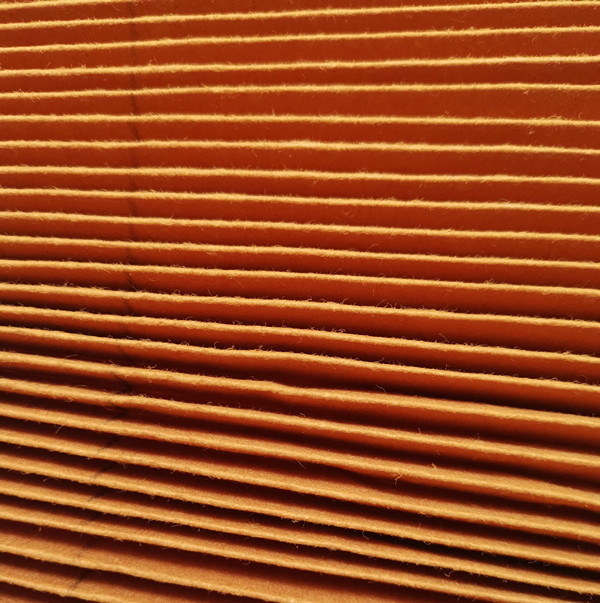
- Pleated elements — increased surface area for the same housing diameter
- Framed elements — rigid panels for HVAC or cabinet filtration
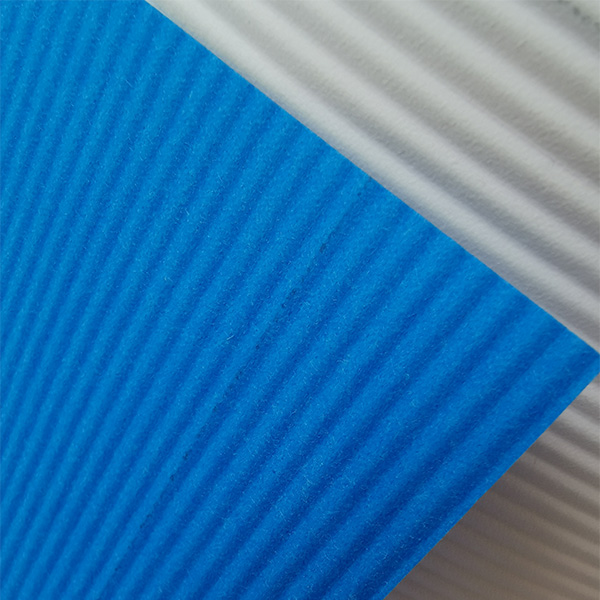
The mesh can also be layered as a support or drainage layer behind nonwoven fabric or fiberglass filter media, combining the structural strength of metal with the fine-particle capture of a softer medium.
ANYA FILTER MEDIA CO., LTD provides custom fabrication services including cutting, pleating, stamping, and welding to specified dimensions, mesh count, wire diameter, and material grade.
Selection Summary Table
| Criterion | Key decision | What to specify |
|---|---|---|
| Aperture size | Particle size to exclude | Mesh count and clear opening in µm or mm |
| Wire diameter | Pressure rating vs. open area | Wire gauge matched to operating pressure |
| Material | Chemical and temperature resistance | Grade (304, 316, galvanised, brass, copper) |
| Weave pattern | Precision vs. flow rate vs. rigidity | Plain / twill / Dutch / crimped / welded |
| Physical form | Housing geometry | Disc, cone, roll, tube, pleated, framed |
| Application environment | Full operating context | Fluid type, temperature, pressure, cleaning method |
When a Recommendation Does Not Apply
- Price and lead time: Current pricing and delivery schedules are not available in the confirmed product materials and should be confirmed directly with ANYA FILTER MEDIA CO., LTD.
- Certifications:
- Ultra-high-pressure or safety-critical circuits: Wire mesh alone may not satisfy the structural requirements of certain pressure vessel codes. Consult an engineer when selecting mesh for safety-critical applications.
THE PEOPLE

About the author
THE COMPANY
ANYA FILTER MEDIA CO., LTD
Shijiazhuang Anya filter media co.,Ltd has been manufacturing a variety of filter medias for lots of filters since 1992. Our mission is to provide maximum value to customers through the continuous pursuit of improvement programs in areas of quality, cost and service. We have the advanced production equipment to manufacture high quality products. We ensure products to meet their specifications and high performance by our strict quality control system.…
About Us ↗Visit company website ↗YOUR NEXT STEP
Bring your brief. Start a useful conversation.
Use case, specification, quantity and delivery window: make the next conversation specific.
Post time: Oct-28-2026