THE BUYER'S GUIDE / SELECTION
Choosing Fuel Filter Paper: Application Fit and Specification Checks
Selecting the right fuel filter paper means matching media specifications to your engine type, fuel chemistry, and operating environment. This guide walks procurement teams and equipment buyers through the key criteria — material composition, basic weight, air permeability, filtration precision, and application fit — using confirmed product specifications from ANYA FILTER MEDIA CO., LTD. It explains what each parameter means in practice, how different vehicle and equipment categories shape the requirements, and what questions to ask before placing an order.

Material composition (cellulose vs. cellulose/melt-blown composite, acrylic resin treatment): determines chemical compatibility, moisture resistance, and structural integrity under fuel pressure.
Basic weight (90–350 g/m²) and air permeability (35–240 L/m²·s): govern flow resistance, filtration density, and compatibility with system pressure differentials.
Filtration precision / micron rating: must match the particle-size sensitivity of the target engine or fuel system, particularly for modern high-pressure injection applications.
Dust-holding capacity and stiffness/bursting resistance: determine service interval length and structural durability under operating pressure.
What Is Fuel Filter Paper?
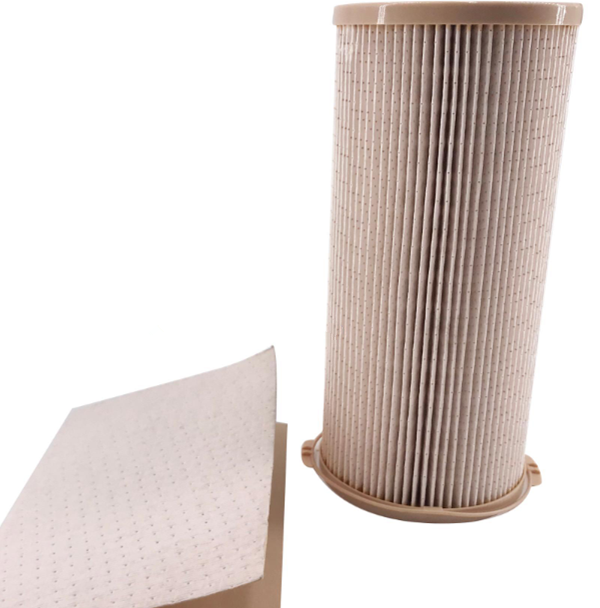
Fuel filter paper is a filter media placed between the fuel tank and the engine to remove solid contaminants — dust, rust particles, metal debris, and free water — before they reach injectors, pumps, and combustion chambers. The quality and specification of the media directly affects engine cleanliness, injector lifespan, and overall fuel system reliability.
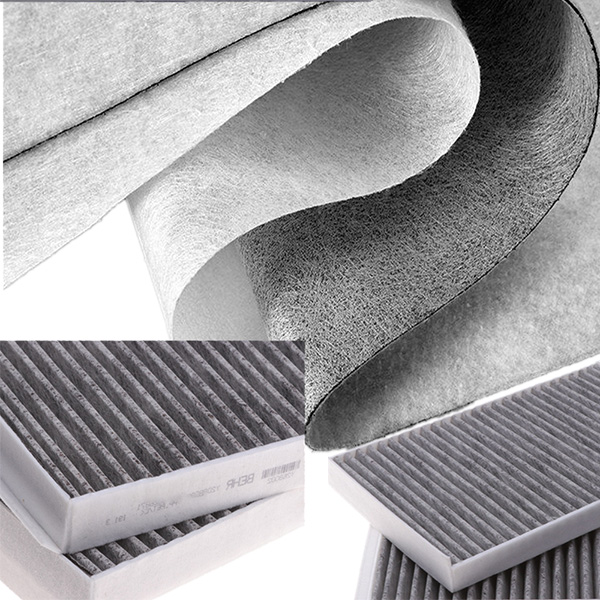
At ANYA FILTER MEDIA CO., LTD, the fuel filter paper product is manufactured from high-quality wood pulp as a base material. It is available in cellulose construction or as a composite blended with melt-blown fiber, with acrylic resin treatment to build stiffness and wet-burst resistance.
Core Specifications to Verify Before Buying
When evaluating any fuel filter paper, the following parameters should be confirmed against your application requirements.
1. Material Composition
The base material determines chemical compatibility, moisture resistance, and temperature tolerance.
- Cellulose: Derived from high-quality wood pulp. Cost-effective for standard diesel and gasoline applications where the fuel is relatively clean and operating temperatures are moderate.
- Cellulose composited with melt-blown fiber: Provides improved water resistance and mechanical durability. Better suited to applications where the fuel may carry higher moisture content or where the filter element must maintain structural integrity over longer service intervals.
- Resin treatment (Acrylic): Both variants in ANYA FILTER MEDIA CO., LTD's range use acrylic resin. This treatment increases stiffness and bursting resistance so the pleated element holds its shape under positive fuel pressure and does not collapse if the filter loads up with contaminants.
Buyer check: Confirm that the media composition is chemically compatible with the fuel type in your system — diesel, gasoline, or blended biofuels each place different demands on the fiber matrix.
2. Basic Weight (g/m²)
Basic weight is the mass per unit area of the filter media, expressed in grams per square metre. For the fuel filter paper offered by ANYA FILTER MEDIA CO., LTD, the available range is 90–350 g/m².
- Lower basic weight (toward 90 g/m²): Thinner media with lower flow resistance. May suit lighter-duty applications or pre-filter stages where the priority is high flow rate rather than fine particle capture.
- Higher basic weight (toward 350 g/m²): Denser media. Higher dirt-holding capacity and typically finer particle capture, but requires a compatible pump and pressure differential to maintain adequate fuel flow.
Buyer check: Align basic weight with the fuel delivery pressure of your system and the expected contamination load of your fuel supply.
3. Air Permeability (L/m²·s)
Although expressed as an air measurement, permeability testing is the standard method for characterising a media's flow resistance before it is processed into elements. The fuel filter paper range spans 35–240 L/m²·s.
- Higher permeability values: Lower flow resistance — suited to applications where fuel delivery volume or system pressure is a constraint.
- Lower permeability values: Higher media density and finer filtration — suited to modern common-rail diesel and direct-injection gasoline systems that require tighter particle control.
Buyer check: Cross-reference permeability with your filter housing dimensions, pleat count, and maximum allowable pressure drop to avoid fuel starvation.
4. Filtration Precision and Micron Rating
Filtration precision determines the size of particles the media can reliably capture. Modern high-pressure fuel injection systems — particularly common-rail diesel and direct gasoline injection — are sensitive to particles in the 5–10 micron range. Older carbureted or low-pressure diesel engines may tolerate somewhat coarser filtration.
Synthetic or composite fibers generally achieve finer, more consistent pore distribution than cellulose alone, which is relevant when selecting fuel filter paper for precision fuel systems.
Buyer check: Identify the micron sensitivity specified by the engine or fuel system manufacturer, then confirm the media grade matches or betters that target.
5. Dust-Holding Capacity and Service Life
Dust-holding capacity describes how much particulate matter the media can accumulate before pressure drop rises to an unacceptable level. Higher capacity translates to longer service intervals. For the fuel filter paper family, confirmed product features include high dust holding capacity, which reduces replacement frequency in demanding applications such as construction machinery operating in dusty environments.
Buyer check: In applications with high ambient dust or degraded fuel quality, prioritize media with stated high dust-holding capacity to avoid premature filter changeouts.
6. Stiffness and Bursting Resistance
A fuel filter element operates under positive fuel pressure and must not deform, collapse, or rupture in service. The acrylic resin treatment in ANYA FILTER MEDIA CO., LTD's fuel filter paper provides high stiffness and bursting resistance, ensuring the pleated structure remains stable across the element's service life.
Buyer check: For high-pressure fuel systems or elements with a high pleat count, verify that the media's wet-burst specification is compatible with your maximum system pressure.
Application Fit by Equipment Category
Different end-use environments impose distinct requirements on fuel filter paper. The following breakdown is drawn from confirmed product application data.
Automotive (Passenger Cars and Commercial Vehicles)
Fuel filter paper is used in both gasoline and diesel vehicle fuel filters. Modern direct-injection engines demand finer filtration to protect injector nozzles and high-pressure pumps. The composite cellulose/melt-blown variant is appropriate where water separation is also required, a common need in markets where fuel quality is variable.
Construction Machinery and Mining Equipment
Heavy equipment engines operate in high-dust environments with longer service intervals between maintenance stops. High dust-holding capacity and high bursting resistance are primary selection criteria. The broader basic weight range (up to 350 g/m²) accommodates the robust, high-volume filter elements used in this sector.
Generator Sets
Generators may run on stored diesel that has aged or been exposed to condensation. Water contamination resistance and consistent filtration efficiency over long standby periods are important. Fuel filter paper with composite construction offers better performance in these conditions.
Marine Engines
Marine fuel systems are exposed to water contamination and saltwater-induced corrosion risk. Specialized filter media with enhanced moisture resistance is a prerequisite. Composite construction provides better structural durability in the wet, corrosive marine environment.
Industrial Machinery
Industrial equipment — including air compressors, hydraulic systems, and process machinery — requires steady fuel flow without clogging that could interrupt operations. High dirt-holding capacity and consistent permeability across the media sheet are valued here.
Key Questions to Ask When Sourcing Fuel Filter Paper
Before finalising a procurement decision, use the following checklist:
- Fuel type compatibility — Is the media rated for diesel, gasoline, biodiesel blends, or all three?
- Micron rating — Does the stated filtration precision match the tolerance requirements of the target engine or fuel system?
- Basic weight and permeability range — Do they align with the filter element dimensions, pleat geometry, and system pressure differential?
- Dust-holding capacity — Is it sufficient for the expected contamination level and target service interval?
- Resin treatment and wet-burst strength — Is the media structurally compatible with the maximum operating pressure?
- Custom specifications — ANYA FILTER MEDIA CO., LTD notes that other specifications beyond the published ranges are available according to customer requirements or sample matching. If a standard grade does not fit, a customised specification may be feasible.
Selection Notes
ANYA FILTER MEDIA CO., LTD manufactures fuel filter paper from high-quality wood pulp in cellulose and cellulose/melt-blown composite forms, with acrylic resin treatment. The specification range — basic weight 90–350 g/m², air permeability 35–240 L/m²·s — covers a wide variety of automotive, heavy-equipment, marine, and industrial applications. Buyers should specify their fuel type, system pressure, micron requirement, and target service interval before selecting a grade. Custom specifications are available upon request.
ANYA FILTER MEDIA CO., LTD has manufactured filter media since 1992, with product lines covering cellulose filter paper, fiberglass filter media, non-woven filter media, and related filter accessories.
THE PEOPLE

About the author
THE COMPANY
ANYA FILTER MEDIA CO., LTD
Shijiazhuang Anya filter media co.,Ltd has been manufacturing a variety of filter medias for lots of filters since 1992. Our mission is to provide maximum value to customers through the continuous pursuit of improvement programs in areas of quality, cost and service. We have the advanced production equipment to manufacture high quality products. We ensure products to meet their specifications and high performance by our strict quality control system.…
About Us ↗Visit company website ↗YOUR NEXT STEP
Bring your brief. Start a useful conversation.
Use case, specification, quantity and delivery window: make the next conversation specific.
Post time: Oct-28-2026