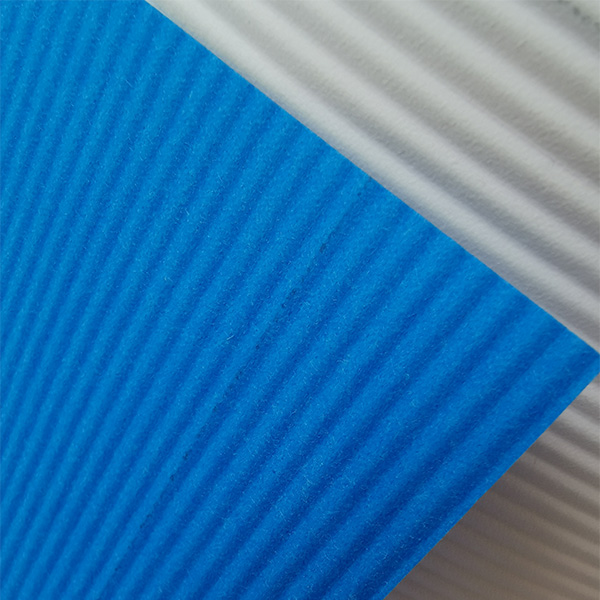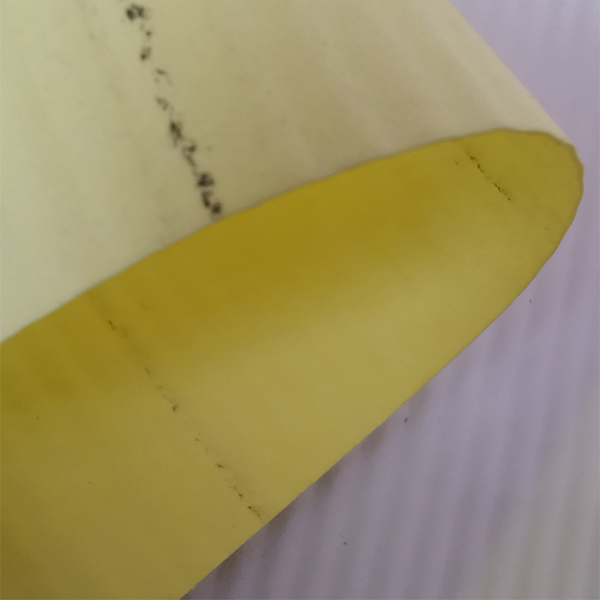

Choose glass microfiber pocket filter media by filter class, resistance, efficiency, roll format, and operating context. This guide uses the M5 to F9 range, 8 mm thickness, 75 g/m² basic weight, and 180 m roll length to help you match the media to HVAC, cleanroom, healthcare, and industrial air filtration needs.
Filter class and measured initial performance: select M5, M6, F7, F8, or F9 according to the required initial efficiency and the pressure resistance your air system can accommodate.
Material and supply format: confirm that glass microfiber suits the moisture, heat, chemical, and flame-related conditions, then choose flat roll, sole sheet, pre-formed pocket in a roll, or sole pocket for the converting process.
Glass microfiber pocket filter media is a practical choice when a pocket filter must combine fine-particle capture with resistance to moisture, heat, and demanding air-handling conditions. The right selection depends on the filter class, the pressure drop you can accept, the efficiency required by the air system, and the way the media will be converted into pockets.
We supply this glass microfiber media in M5, M6, F7, F8, and F9 grades. Each grade uses a 75 g/m² basic weight and 8 mm thickness, while the initial resistance and initial efficiency change with the grade. That gives you a clear starting point for matching the media to a medium-efficiency panel filter, pocket air filter, HVAC unit, or higher-efficiency air-cleaning stage.
Start with the required filter class
Filter class should be the first purchasing decision because it sets the balance between particle capture and airflow resistance. Our grades are M5, M6, F7, F8, and F9 under EN779-2012.
| Filter class | Initial resistance | Initial efficiency | Color |
|---|---|---|---|
| M5 | 10 Pa | 15% | Light yellow |
| M6 | 18 Pa | 30% | Orange |
| F7 | 40 Pa | 60% | Purple |
| F8 | 69 Pa | 75% | Yellow |
| F9 | 75 Pa | 80% | Golden yellow |
The resistance and efficiency values were tested at a flow rate of 32 L/min with a face velocity of 5.3 cm/s. Use the figures as a basis for discussing the filter design with your engineering team, then match the selected class to the fan capacity and the required air-cleaning stage.
M5 and M6 suit buyers who need a lower initial resistance for medium-efficiency air filtration. F7 is a suitable point for systems that need a stronger efficiency level while still remaining within the same 8 mm media construction. F8 and F9 fit applications that place greater weight on fine-particle filtration, such as higher-efficiency HVAC stages, healthcare air handling, cleanroom support systems, and industrial air treatment.
Check the material against the operating environment
Glass microfiber is made by an air-laid process. Its inorganic fiber structure gives the media high temperature resistance and flameproof characteristics. The material also resists moisture absorption, which is useful in humid air-handling areas where organic media can be affected by water exposure.
Picture a pocket filter installed in a humid ventilation area. The media must keep its shape and filtration function as air moves through the pockets. Glass microfiber is suited to this type of requirement because it does not readily absorb moisture. The same material choice can support food-processing, pharmaceutical, marine, and washdown-related air systems where humidity is part of the operating context.
Chemical exposure is another selection point. Glass microfiber has chemical resistance for corrosive gases, solvents, and acidic or alkaline aerosols. If your air stream includes process contaminants, send the expected chemical conditions with your inquiry so we can confirm the suitable media configuration instead of selecting by filter class alone.
Match resistance and efficiency to the air system
Initial resistance affects the pressure demand placed on the air-handling system. The M5 grade has the lowest listed initial resistance at 10 Pa, while F9 has the highest at 75 Pa. Initial efficiency rises from 15% for M5 to 80% for F9 under the stated test condition.
A system with limited fan capacity may need the lower-resistance M5 or M6 grade. A system designed to remove finer particles may need F7, F8, or F9, with the corresponding resistance included in the system calculation. Do not choose F8 or F9 only because the grade sounds more suitable. Compare its resistance with the available fan pressure and the pocket filter dimensions.
The media has high dust-holding capacity, which helps pocket filters retain particulate loading through a larger surface area. In a commercial HVAC unit, this supports a deep-pocket design where the filter collects dust across the media surface. In a cleanroom support application, the higher grades can be considered when fine-particle control is the main requirement and the air system can accommodate the resistance.
Confirm the format before ordering
The standard roll length is 180 m. We can produce the material as flat single-layer material in a roll, sole sheet, pre-formed pocket in a roll, or sole pocket. The best format depends on your converting equipment and purchasing plan.
Choose flat roll material when your production line makes the pocket shape in-house. A sole sheet may suit a cutting operation that needs individual pieces. Pre-formed pocket material reduces forming work for a filter assembly process, while a sole pocket is useful when the finished pocket format is the required incoming component.
Measure the usable width, pocket depth, sealing area, and cutting pattern before requesting a roll. The 8 mm thickness and 180 m roll length should be considered together with your machine setup, storage space, and expected consumption. Send a drawing or a sample if the media must fit an existing pocket frame.
Select the grade for the real use context
For commercial HVAC and medium-efficiency panel air filters, M5 or M6 can be considered when lower initial resistance is important. F7 is suited to systems that require a higher efficiency level for fine-particle control. F8 and F9 are the better starting points for air-handling systems where the purchasing specification calls for higher efficiency and the fan system is sized for their higher initial resistance.
Healthcare facilities, cleanrooms, laboratories, and pharmaceutical production need a defined air-cleaning design rather than a media grade chosen in isolation. Glass microfiber can be used in higher-efficiency pocket filter applications and can complement HEPA filtration in cleanroom systems. Ask your engineering team to confirm where the pocket filter sits in the air-cleaning sequence and what efficiency target applies at that position.
Industrial ventilation and process-air systems should also consider heat, moisture, chemical exposure, dust loading, and the available replacement format. Glass microfiber is a strong fit when those conditions matter together. The final order should identify the grade, roll or pocket format, required dimensions, and intended air-system use.
Questions buyers often ask
Is F8 glass microfiber pocket filter media suitable for a higher-efficiency HVAC stage?
Yes, F8 is one of the available grades and has an initial efficiency of 75% with an initial resistance of 69 Pa under the stated test condition. It uses the same 75 g/m² basic weight and 8 mm thickness as the other grades. Check the fan pressure and pocket dimensions before choosing it for an existing HVAC unit.
What is the difference between M5 and F9 media?
M5 has an initial resistance of 10 Pa and an initial efficiency of 15%, while F9 has an initial resistance of 75 Pa and an initial efficiency of 80%. M5 suits lower-resistance medium-efficiency filtration. F9 suits applications that require the highest efficiency in this range and can accommodate the greater resistance.
Can the media be supplied as a pre-formed pocket?
Yes, the material can be produced as pre-formed pocket in a roll or as a sole pocket. It can also be supplied as flat single-layer roll material or sole sheet. Tell us which converting stage you use, along with the pocket dimensions and sealing arrangement, so we can discuss the correct format.
What roll length should be included in the purchasing plan?
The listed roll length is 180 m. This format suits buyers who convert the media into pockets or sheets in their own production process. Confirm the required width, cutting pattern, and storage area before ordering, especially when the roll will be used for an existing pocket filter line.
Send the selection details with your inquiry
Choose glass microfiber pocket filter media by grade first, then confirm resistance, efficiency, operating environment, and conversion format. M5 and M6 fit lower-resistance medium-efficiency needs, while F7 to F9 fit higher-efficiency air filtration when the system can accept the listed resistance. Send your required class, media width, pocket dimensions, format, annual quantity, and air-system application to ANYA FILTER MEDIA CO., LTD for a focused quotation.

About the author
The company
ANYA FILTER MEDIA CO., LTD
Shijiazhuang Anya filter media co.,Ltd has been manufacturing a variety of filter medias for lots of filters since 1992. Our mission is to provide maximum value to customers through the continuous pursuit of improvement programs in areas of quality, cost and service. We have the advanced production equipment to manufacture high quality products. We ensure products to meet their specifications and high performance by our strict quality control system.…
About Us ↗Visit company website ↗Post time: Nov-10-2026