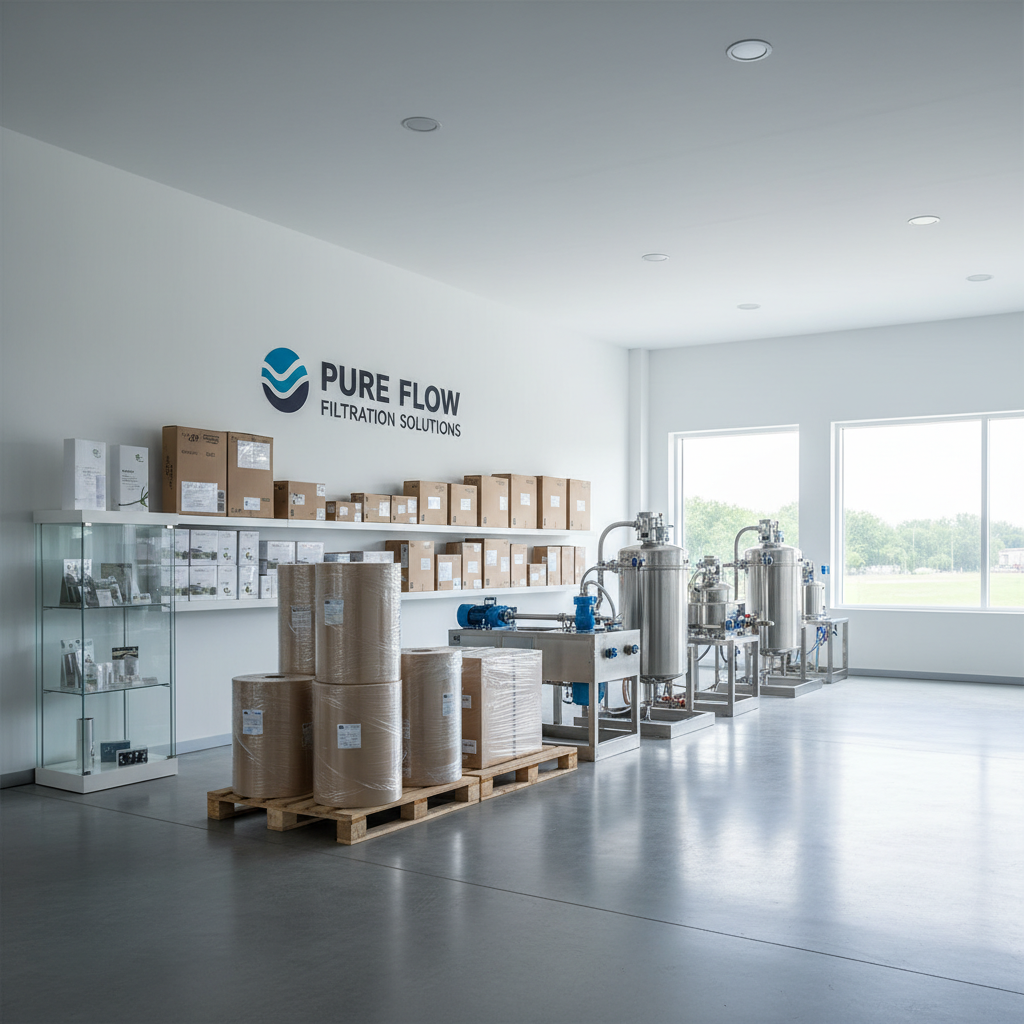
Industrial filtration markets are currently witnessing a significant shift toward high-efficiency synthetic media, where the glass fiber filter paper price is often dictated by a complex interplay of raw material purity, resin binding technology, and specific pore size requirements. As regulatory pressures on air quality and industrial emissions tighten, procurement teams are moving away from simple cost-per-roll metrics toward total cost of ownership (TCO) calculations.
The challenge for engineering teams lies in balancing initial acquisition costs with the technical demands of burst strength and air permeability. When choosing between different glass fiber grades, a slight variation in resin content or thickness can lead to substantial differences in filter lifespan and energy consumption, making the pricing analysis a technical exercise rather than a purely financial one.
This analysis explores the primary technical drivers influencing the cost structure of glass fiber filter media, interprets critical specifications, and provides a decision framework for buyers to evaluate the trade-offs between material density and filtration efficiency.


Glass fiber filter media are engineered as non-woven structures, where fine borosilicate or E-glass fibers are randomly oriented to create a complex tortuous path for particulates. This architecture allows for high collection efficiency of sub-micron particles while maintaining structural integrity under pressure.
The structural stability of these media depends heavily on the binding agent. Professional manufacturers, such as Anya Filter Media, utilize a precise resin content (typically around 20-21%) to ensure that the fibers remain locked in place, preventing media migration and ensuring a consistent mean pore size.
Evaluating a product requires looking beyond the surface price. Key parameters such as weight (100-210g/sqm) and thickness (0.36-0.60mm) directly correlate to the dust-holding capacity. A heavier media typically offers more depth for particle entrapment but may increase the initial pressure drop across the filter.
Air permeability, measured at 127Pa, is a critical efficiency indicator. For high-performance industrial applications, permeability not less than 40 L/sqm.sec is essential to prevent excessive energy loss in the ventilation system. When this value drops, the system must work harder to push air through, increasing operational costs.
Furthermore, the burst strength (not less than 250 KPa) ensures that the media will not rupture during sudden pressure surges or high-velocity cleaning cycles. Buyers must verify these mechanical limits against their specific system peak pressures to avoid catastrophic filter failure.
One of the most significant engineering challenges in fiberglass media production is the balance between resin content and airflow. Resin acts as the "glue" that provides mechanical strength and chemical resistance, but too much resin can clog the interstitial spaces between fibers.
This technical equilibrium is why precision in manufacturing is paramount. Inconsistent resin distribution across a roll leads to "dead zones" where filtration efficiency is high but airflow is restricted, resulting in uneven loading and premature clogging of the filter element.
To understand the value proposition of different configurations, we can look at a normalized engineering assessment. This compares various media profiles based on their operational efficiency versus structural durability.
The following data represents a relative assessment of how different weight-to-thickness ratios impact the overall performance score in standard industrial air filtration scenarios.
In representative engineering scenarios, such as industrial dust collection or cleanroom HEPA precursors, the media must withstand constant pressure fluctuations. A common deployment involves using glass microfiber pocket filter media to capture fine airborne particulates before they reach more expensive final-stage filters.
The success of such a deployment depends on the corrugated depth (0.1-0.3mm), which prevents the media from flattening against the support frame. By maintaining this depth, the effective filtration area is preserved, ensuring that the air permeability remains stable over the life of the filter.
The industry is trending toward composite fiberglass filter media that integrate synthetic polymers to enhance mechanical strength while reducing weight. This evolution aims to lower the overall energy footprint of filtration systems by reducing the initial pressure drop without sacrificing the mean pore size.
Future R&D is focusing on functionalized resins that can repel moisture or resist specific chemical corrosives, extending the service life of the media in harsh industrial environments. This shift will likely move the pricing conversation from "cost per roll" to "cost per cubic meter of filtered air."
As automation in filter pleating increases, the demand for rolls with precise widths (such as 1,050mm) and consistent roll inner diameters becomes critical to minimize waste and maximize production throughput for filter manufacturers.
Procurement officers should evaluate media based on the specific operational profile of their facility. A "one size fits all" approach often leads to either premature failure or excessive energy costs.
The following matrix provides a comparative framework for selecting media based on configuration profiles rather than just price.
By aligning the technical requirements (like burst strength and pore size) with the application scenario, companies can optimize their maintenance cycles and reduce long-term operational expenditure.
| Configuration Profile | Key Specification | Operational Factor | Recommended Use Case |
|---|---|---|---|
| Basic Profile | 100g/sqm Weight | High Permeability | Pre-filtration stages |
| Standard Profile | 150g/sqm Weight | Balanced Load | General HVAC systems |
| High-Duty Profile | 210g/sqm Weight | High Dust Capacity | Industrial Dust Collection |
| Precision Profile | 30 micron Mean Pore | High Efficiency | Cleanroom Pre-filters |
| Automated Profile | 1,050mm Standard Width | Production Speed | High-volume OEM manufacturing |
| Baseline Profile | 250 KPa Burst Strength | Mechanical Stability | Pulse-jet cleaning systems |
Resin content (typically 20-21%) is a primary cost driver because it requires precise chemical application and curing processes. Technically, the resin provides the burst strength (min 250 KPa) and prevents fiber shedding. However, excessive resin can reduce air permeability by blocking the pores, while too little resin makes the media fragile. Therefore, the price reflects the manufacturer's ability to maintain this tight tolerance across large rolls.
The weight, ranging from 100 to 210g/sqm, determines the mass of fibers per unit area. Heavier media generally offer a greater depth of filtration, which allows them to hold more particulates before the pressure drop becomes critical. For high-dust environments, a 210g/sqm media is preferred to extend the service life, whereas a 100g/sqm media is more suitable for low-load pre-filtration where airflow is the priority.
Yes, provided the burst strength meets the system requirements. Our specified burst strength of not less than 250 KPa is designed to withstand the shocks associated with pulse-jet cleaning systems. To ensure longevity, engineers should verify that the peak pressure of the cleaning pulse does not exceed the material's burst limit and that the corrugated depth (0.1-0.3mm) is sufficient to prevent media collapse.
The mean pore size (e.g., 30 microns) represents the average opening, which dictates the overall efficiency of the filter. The maximum pore size (e.g., 55 microns) is a critical "worst-case" limit; it ensures that no particle larger than this size can pass through the media. For critical applications, the maximum pore size is the more important metric to prevent contamination, while the mean pore size governs the pressure drop.
Glass fiber media is sensitive to compression and moisture. Standard packing includes plain or corrugated paper to protect the edges. Rolls are typically delivered with a width of 1,050mm and a diameter of 700mm, weighing approximately 110kg. Ensuring a stable roll inner pore diameter is essential for seamless integration into automated pleating machines, reducing downtime during setup.
Air permeability is a direct measure of how easily air flows through the media. A value of not less than 40 L/sqm.sec ensures that the initial resistance is low. As the filter loads with dust, the permeability decreases. If the starting permeability is too low, the fan system must operate at higher power to maintain the required CFM, leading to significantly higher monthly electricity costs across large industrial HVAC installations.
The analysis of glass fiber filter paper price reveals that the true value of the media is found in the balance of resin content, burst strength, and air permeability. When these factors are aligned with the specific application—whether it be high-capacity dust collection or precision air filtration—the result is a significant reduction in total operational cost.
For procurement teams, the practical implication is clear: prioritize technical specifications over nominal price. By selecting media with a verified mean pore size of 30 microns and a burst strength of 250 KPa, operators can ensure system reliability and energy efficiency, ultimately safeguarding the long-term performance of their industrial filtration infrastructure.