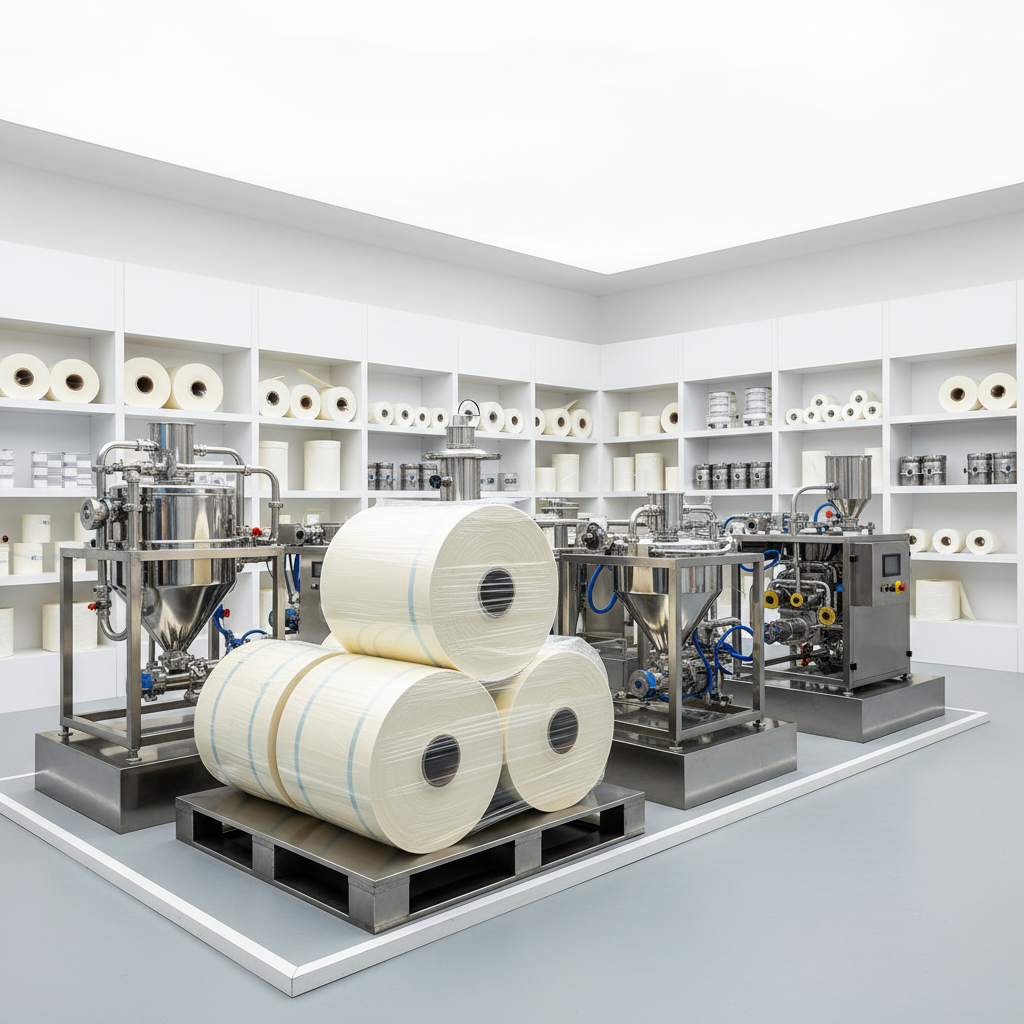

Finding reliable filter media manufacturers is a critical decision for industrial operators who require precision in air and fluid purification. The choice of filtration material directly impacts the operational efficiency of HVAC systems, cleanrooms, and automotive components. This guide explores the technical requirements and procurement strategies necessary to ensure that the selected media meets stringent industrial standards while minimizing long-term operational costs.
In the B2B landscape, the gap between a generic product and a high-performance engineered solution often lies in the fiber structure and the quality control systems of the producer. For applications such as HEPA filtration, where efficiency at 0.3 microns is mandatory, the reliability of the raw material determines whether a facility maintains its sterile environment or suffers from contamination. Understanding the interplay between dust-holding capacity and pressure drop is essential for any procurement professional.
Throughout this analysis, we will examine the key performance indicators (KPIs) used to evaluate filtration materials, the importance of customizable specifications, and how to audit a supplier's testing capabilities. By focusing on technical evidence and application-specific needs, buyers can move beyond simple price comparisons to a total-value assessment of their filtration supply chain.
Evaluating Industrial Filtration Suppliers
The process of sourcing from professional filter media manufacturers requires a deep dive into the manufacturer's production capabilities and quality assurance frameworks. High-quality filtration is not merely about the final product but the consistency of the manufacturing process. A reputable supplier should possess advanced production equipment capable of maintaining uniform fiber distribution and mechanical strength across large batches. For instance, in the production of cellulose or fiberglass media, any variation in thickness or porosity can lead to "leakage" paths, compromising the entire filtration system.
Furthermore, the ability to handle customized requirements is a hallmark of a sophisticated supplier. Many industrial applications require specific combinations of activated carbon, antimicrobial agents, or electrostatic treatments to target particular contaminants. A manufacturer that offers customized testing based on customer samples provides a significant advantage, as it ensures that the media is optimized for the actual operating environment rather than relying on theoretical laboratory data. This iterative process of sampling and verification reduces the risk of premature filter failure and unplanned downtime.
Criteria for Selecting High-Performance Media
Selecting the right filtration material involves balancing conflicting technical requirements. While increasing the density of the media typically improves filtration efficiency, it often leads to higher airflow resistance, which increases energy consumption for the fans or pumps. The following subsections detail the seven primary dimensions that engineers and procurement officers must analyze to optimize their filtration systems.
Material Composition and Fiber Structure
The base material—whether it be cellulose, fiberglass, or non-woven synthetic fibers—defines the chemical and thermal limits of the filter. A uniform fiber structure is essential for ensuring that the filtration load is distributed evenly across the surface. In HEPA-grade materials, the precise arrangement of micro-fibers allows for the capture of sub-micron particles through interception and diffusion without creating excessive bottlenecks in the airflow.
| Material Type | Key Property | Primary Limitation | Ideal Use Case |
|---|---|---|---|
| Cellulose | High Rigidity | Moisture Sensitivity | Oil & Fuel Filtration |
| Fiberglass | Extreme Efficiency | Fragility | HEPA / Cleanrooms |
| Non-woven | Flexible Structure | Lower Efficiency | Pre-filtration / HVAC |
| Laminated | Composite Strength | Higher Cost | Oil/Water Separation |
| Electrostatic | Low Pressure Drop | Charge Decay | Cabin Air Filters |
| Microfiber | High Surface Area | Clogging Rate | Industrial Dust Collection |
Filtration Efficiency and Micron Ratings
Efficiency is measured by the percentage of particles removed at a specific size. For high-end air purification, an efficiency of 99.97% at 0.3 microns is the industry benchmark for HEPA media. It is vital to verify these ratings through independent testing. A buyer must ensure that the efficiency is maintained consistently across the entire roll of media, not just in a small test sample, to avoid performance gaps in the final pleated filter.
Airflow Resistance and Pressure Drop
Pressure drop is the measure of resistance the media offers to the air passing through it. Low resistance is critical for reducing energy costs and preventing stress on the HVAC system. Advanced media are engineered for high porosity while maintaining filtration integrity. The goal is to maximize the "dust-holding capacity" while keeping the initial pressure drop as low as possible to extend the service life of the filter element.
Mechanical Integrity and Durability
Filters must maintain their shape under high airflow and varying humidity. Mechanical integrity prevents the media from rupturing or collapsing, which would result in a total failure of the filtration barrier. This is especially important for industrial cartridge filters and automotive cabin filters that are subject to vibration and pressure surges during operation.
Customization and Sample Verification
Because no two industrial environments are identical, the ability to customize thickness, grade, and treatments is essential. A professional manufacturer will provide sample rolls for pilot testing. This allows the client to verify the media's performance in their specific pleating machines and application environments before committing to a large-scale procurement order.
Environmental Compatibility
The operating environment—temperature, humidity, and chemical exposure—dictates the material choice. For example, in high-humidity environments, standard cellulose may degrade, requiring treated or synthetic non-woven alternatives. Understanding the chemical resistance of the fiber prevents premature degradation and ensures that the filter does not become a source of contamination itself.
Supply Chain Stability and Quality Control
Consistency is the most challenging aspect of mass-producing filter media. A strict quality control system, involving continuous monitoring of fiber weight and pore size, is necessary. Buyers should evaluate the manufacturer's testing facilities to ensure they can validate specifications against international standards, ensuring that every shipment performs identically to the last.
FAQ
What is the difference between HEPA and standard filter media?
HEPA (High-Efficiency Particulate Air) media is specifically engineered to capture at least 99.97% of particles as small as 0.3 microns. Standard media, such as basic non-woven or cellulose papers, are typically designed for larger particles and serve as pre-filters to protect the more expensive HEPA stages. HEPA media uses a denser, more precise fiber arrangement to trap microscopic contaminants like bacteria and smoke.
How does pressure drop affect the cost of filter operation?
Pressure drop refers to the resistance air encounters when passing through the filter. A higher pressure drop requires the fan or blower to work harder to move the same volume of air, which directly increases electricity consumption. By choosing media with an optimized fiber structure that balances efficiency and permeability, companies can significantly reduce their total cost of ownership over the lifecycle of the HVAC system.
Can filter media be customized for specific industrial pollutants?
Yes, professional suppliers can customize media by adding specialized treatments. For instance, activated carbon can be integrated to remove odors and volatile organic compounds (VOCs), while antimicrobial agents can be added to prevent mold growth on the filter surface. Additionally, the thickness and density of the fiber mat can be adjusted to target specific particle size distributions based on the industrial application.
What should I look for when auditing a filtration material supplier?
Focus on three main areas: production equipment, testing capabilities, and quality control records. Ensure the supplier has the machinery to maintain uniform specifications across large rolls. Check if they have an in-house lab capable of testing efficiency and pressure drop. Finally, ask for their quality control logs to see how they handle variance and ensure batch-to-batch consistency.
Why is mechanical integrity important for pleated filters?
Pleating increases the surface area of the filter but puts stress on the media at the fold points. If the material lacks mechanical integrity, it can tear or deform under high airflow, creating "blow-through" holes. This leads to a complete bypass of the filtration process, allowing contaminants to pass directly into the clean environment, which can be catastrophic in medical or semiconductor cleanrooms.
How does fiber structure influence dust-holding capacity?
Dust-holding capacity is the amount of contaminant a filter can capture before the pressure drop becomes too high. A media with a deep, porous fiber structure can store more particles within its matrix rather than just on the surface. This prevents "surface cake" buildup, allowing the filter to operate longer before needing replacement, thereby reducing maintenance frequency and waste.
References and further reading
- ISO 29463: High-efficiency filters (HEPA) for air — General specifications.
- ASHRAE Standard 52.2: Method of Measuring Air Cleaner Efficiency.
- Industrial Filtration Handbook: Principles of Fiber Matting and Porosity.
Related Articles